Tag Archives: leaving cert english

Comparative 30/40 split

I’ve just received this email:

Hi,
First of all I’d like to say that this site is a great resource and is of great benefit this close to exams.
However I have a question regarding the comparative section that I can’t find the answer to on the site.
In 2011 one comparative question was as follows:
2. “The study of a theme or issue can offer a reader valuable lessons and insights.”
(a) Identify and discuss at least one valuable lesson or insight that you gained through the study of a theme or issue in one text on your comparative course. (30)

(b) Compare at least one valuable lesson or insight that you gained, from studying the same theme or issue (as discussed in (a) above), in two other texts on your comparative course.
The valuable lesson or insight may be the same, or different, to the one discussed in (a) above.

Does this mean that for part (a) you discuss solely one text, for example Dancing at Lughnasa, without making a comparison to the other two texts, or mentioning them at all?
And in part (b) do you discuss only the other two texts (Inside I’m Dancing and How Many Miles to Babylon) without referencing Dancing at Lughnasa at all?

Thank you for reading and I hope you can help. This issue is not one we have discussed in class and I’m not sure of what to do.

Sincerely,
M


Dear M,

This sounds more complicated than it is but in an exam the uncertainty it creates could be very off-putting. In my opinion the comparative is already complex enough and this kind of long-winded unwieldy question can throw students – so New Examinations Manager in English (they appointed someone new this year), if you’re out there and listening, you need to work on your “clarity of purpose” and “coherence of delivery” in setting these questions next year!!! Sometimes less is more!

Anyway, to answer your question, YES you just discuss ONE TEXT in part (a). You look at ONE theme and at least ONE valuable lesson or insight. You don’t mention the other two texts at all. I’ve checked this in the marking scheme to be doubly sure.

For part (b) you discuss TWO OTHER TEXTS. You must discuss the SAME THEME. Again, you must discuss at least ONE valuable lesson or insight – doesn’t matter if it’s the same insight as part (a) or a different one.

Finally, you wondered if you need to refer back to TEXT 1 (in your case Dancing At Lughnasa). This is entirely up to you. The marking scheme says that you are free to completely ignore TEXT 1. So if you want to focus on TEXT 2 and TEXT 3 ONLY in part (b) you can choose to do so and won’t be penalized.

However, if you choose to refer back to the points you made in part (a) that’s fine too. You might feel this adds to the overall coherence of your answer. If it does then do it. But if you feel it just confuses you and makes your answer stray all over the place then don’t do it.

BE VERY CAREFUL OF THE WORDING OF THE QUESTION.

Sometimes for the 30/40 mark split answer, part (b) includes the phrase “in the light of your discussion in part (a) above”. In this case you may refer back briefly to some of the points you made in part (a) but if you didn’t you wouldn’t lose any marks. As long as you discuss the same theme you’re fine. In 2004 the Literary Genre question contained this phrase but the marking scheme said students were free to choose the same aspect of storytelling OR a different one. So reading the question carefully and underlining the specific directions is important.

To summarise, when the question is split into 30marks/40marks:

  • You discuss one text on its own.
  • Then you discuss the other two texts.
  • As to whether or not you link parts (a) and (b), all of the marking schemes basically say you can if you want to but you don’t have to.

Read the specific question to decide whether you need to discuss the same theme/ same aspect of literary genre / same aspect of cultural context. In general the rule seems to be that you must stick with one theme for (a) and (b) but you can choose any aspect of storytelling or cultural context and it doesn’t have to be the same one in (a) and (b).

Hope this helps clarify this issue!

Regards,

Evelyn



Poetry essays

General advice on poetry essay:

  1. Length of your essay = absolute minimum 3 & a half pages (some people can and will write more in 50 minutes).
  2. It’s ok to deal with four poems (not all six you’ve studied) in your essay BUT KNOW at least 5 – it depends on the question asked which poems you’ll choose to discuss.
  3. Your essay MUST deal with WHAT THE POET SAYS (themes/ideas) and HOW THE POET SAYS IT (techniques). What techniques has the poet used in the quotes you’ve included AND WHY!!! (effect of the technique on the poem/reader).
  4. Focus on answering the question – first and last sentence of each paragraph must connect (what you will discuss/have discussed) to the question asked.
  5. Opening sentence of your essay – please don’t simply parrot back the question word for word. You must respond to the question immediately but there are more subtle ways to do it! “I agree fully” sentences are a yawn-fest for the examiner.
  6. Final sentences of your essay – personal response. What insight or wisdom have you gained from studying this poet. What feelings did his/her poetry evoke in you.

Good luck!

Topic of the week: The Future

Trying to imagine what the future will look like can make your brain wibble-wobble in all sorts of uncomfortable ways.

For some reason when people envisage the future, cities looks quite like they do now but they’re curvier and have random flying pods zooming about.

Everything is also crystal clean sparkly clear and the air is somehow fresher, brighter, sharper than it is when you look out the window (not sure how that will happen but here’s hoping) – or else we’ve been through some kind of armageddon and everything looks vaguely like it did during World War 2…

Given that we can only speculate, here are a few questions to get your idea juices flowing…

On a global scale:

  • Will we end up zooming around in hovercrafts?
  • Will the ice caps melt?… and will Ireland drown as corresponding sea levels rise?
  • Will solar, wind and wave technology finally free us from our dependance on fossil fuels?
  • Will medical advances allow us to grow spare body parts? And will we be able to select the genes our children inherit? Perhaps we’ll even be able to ‘transplant’ our brains into a new body and thus find a way to live forever!
  • Will the threat of nuclear annihilation re-imerge? Will religious fundamentalism lead to the break-out of a global jihad between Muslims and Christians? Will ‘the Hunger Games’ ever come to pass? It may sound crazy but pick up a copy of Orwell’s 1984 and you’ll see just how much big brother’s already come to pass!
  • Will robots finally do our housework for us? (please let the answer to this one be yes…)
  • Will we find a way to populate other planets? Holidays on Mars anyone? Underwater cities? There are 7 billion of us on earth now after all. That’s a whole lotta peeps for one planet…

On a personal level:

  • What will your life be life? What will you spend your time doing?
  • What will you achieve?
  • Will you make the world a better place? Or a worse one? Or have no effect on anything!
  • Who do you picture IN your future with you?

I’m particularly taken by the idea of augmented reality which isn’t far in the future – check these out:

http://www.youtube.com/watch?v=6Cf7IL_eZ38

http://www.ted.com/talks/pattie_maes_demos_the_sixth_sense.html

http://www.youtube.com/watch?v=a6cNdhOKwi0

http://www.youtube.com/watch?v=9c6W4CCU9M4

Also, if you’re not doing the Leaving Cert until next year I recommend you read “An Optimist’s Tour of the Future” by Mark Stevenson over the summer. If you like reading that is…which I’m presuming you do if you browse this website for shits and giggles!!!

Hamlet in Howth

I’m a big fan of Alan Stanford’s podcasts Hamlet in Howth.

They’re an excellent way of revising the play – but make sure you stay focused by taking notes as you listen.

Here’s the link: http://www.rte.ie/radio1/drama/hamletinhowthall.html

Book Covers

I have to admit, until recently I’d never given a huge amount of thought to the process involved in designing a book cover.

I love books, always have, and worked for a couple of years in the best bookshop in Ireland (Charlie Byrne’s Bookshop in Galway for the uninitiated) but I loved the words IN the book more than the pictures ON the book. I’m sure on recollection that a striking cover has often grabbed my attention but it is the opening page that either gets me to spend my money or prompts me to quietly place the book back on the shelf.

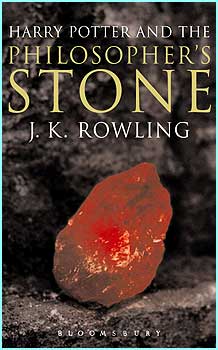
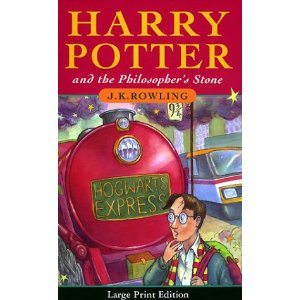
A little more recently, after I’d already begun my teaching career, I remember mocking any of my friends who chose one of the ‘adult’ dust jackets when purchasing the Harry Potter books. I thought it somehow foolish or dishonest not to admit that yes, you were reading a kids book, and by the way you were bloody well enjoying it too!

But someone, somewhere, in the marketing devision of a publishing house decided once upon a time that you could get more people to buy the same book – people of varying ages and genders, people with widely differing tastes in literature – if you offered them a choice of book cover that spoke to them or reflected who they felt themselves to be.

And I guess if they’ve kept doing it, then it works!

Perhaps they’re playing to how predictable most of us tend to be. We know what we like, and what we don’t like, we tend not to like change and not to take risks. So if a book looks like science fiction from the cover – and we ‘know’ we don’t like sci-fi, we probably won’t even pick it up. Similarly, if a book is in any way pink – or even worse – pink neon! – I will treat it like it has a highly contagious disease. I have decided, in my wisdom, that if it looks anything like romantic fiction, it’s not for me!

So why my sudden interest in the topic? Well, I have to admit to a fascination with the twists and turns the leaving cert. paper 1 in English throws up on occasion. I like the thought that were I to sit the paper, I’d have to apply my knowledge to something I really know nothing about; the notion that I’d have to “ad-lib… unselfconsciously with overflowing speech” and think on my feet in order to do well. Two years ago one such minor curve ball appeared when one of the comprehension questions asked students to compare two contrasting dust jackets for the same novel, “Fahrenheit 451”. As well as identifying the extent to which they captured the essence of the text visually, you were expected to figure out why one appealed to you more than the other. In the process I guess you were identifying who the target audience was in each case and why you were more attracted to one dust jacket over the other.

Rather than waffle on any further about my own lack of knowledge, I instead want to send you in the direction of people who know infinitely more about this than I do. The first is a blog post in response to an article in the New York Times, the second is a Ted talk  I stumbled upon by accident by the truly eccentric book cover designer Chip Kidd.

p.s. thanks to Julian Girdham’s twitter feed @sccenglish, I also have this link for you http://www.shortlist.com/entertainment/the-50-coolest-book-covers