Tag Archives: leaving cert english

Competitions!

  1. WIN €3,000! Write a short film script – submit an original concept for a short film that tackles the serious issue of mobile phone use while driving. Winner also gets the chance to work with a team of professional film producers to turn their short film concept into a reality. Must be over 15 to enter. See website www.keepdramaofftheroads.ie The road safety authority and setanta are promoting this competition. Closing date for entries is Friday 16th Nov @ 6pm.
  2. Create an advertising campaign. Total prize fund is €5,000. The Milk It Awards want a team of up to 6 students to promote dairy products to students in your school – you can focus on milk or cheese or yoghurt or all three. You make a 2 minute video pitch with a creative idea. If you are chosen you implement your campaign in your school and may be invited to the National Finals to sell your idea to the client. See website www.milkitawards.ie Closing date for video pitch is 23rd Nov.
  3. UCC law faculty essay competition: €200 for the best essay(s) in each category. Senior students only. Closing date is the 23rd Nov. Application forms are available at www.ucc.ie/law (I can’t find them but I”m told they’re there!). Competition encourages students to consider the relevance and impact of law on their lives and society generally. Write 1000 words on any one of the following topics: (a) “It is now time for Seanad Eireann to be abolished” Discuss. / (b). “The State & not the Family is the ultimate guardian of Irish children” Discuss / (c). “Gay Marriage – the obvious next step?” Discuss / (d). “Should debt forgiveness be introduced?” / (e). It has been argued that because the household charge is bad law citizens do not have to respect it. Do you agree? / (f). Should Ireland have sentencing guidelines for criminal cases?
  4. Fantasy Writing Competition – write a short story in this genre. The theme for this year is “Under the Sea” – think mermaids, sea monsters, creatures from the deep, pirates. There are 3 categories Primary, Junior students and Senior students. Length is 800 – 1200 words. The winner wins a tablet (must be a Galaxy tab or something similar) and a meeting with a top Irish literary agent (in other words the opportunity to get signed and published!!!). Runner up prizes of an ipod touch. See www.facebook.com/johnwestfantastwriting for application forms. Closing date 30th Nov.
  5. Think of a renewable energy idea: The primary school competition is over already so if you log on to the website www.tellthefuture.eu you’ll see examples. Complete the following in 500 words or less (Junior Category)
or 750 words or less (Senior Category): “A global plea has been issued to all young people to submit their practical ideas on how to power their country into the future in a sustainable, environmentally-friendly way. My plan for my country is…” Closing date for entries is the 30th Nov.
  6. Design a cover art project – your aim is to promote positive mental health. Use landscape on A4 size white card in oil, watercolour, crayon or ink. See www.mentalhealthireland.ie closing date for entries is 7th Dec. There is also a photographic competition to promote positive mental health – photos must be taken with a 6 megapixel camera or greater and must be printed A4 landscape 12 inch x 8 inch and a caption/title for your entry must be included. If there’s a person in the photo you must get written permission from them and include it with your entry. Closing date for both competitions is the 7th December.


Comparative Crisps

Let me begin with an admission – this wonderful, creative method of teaching the essence of what the comparative is all about was not my idea. A guy I teach with has a sister who’s a teacher who teaches with a teacher in Castlebar who uses this as a technique to make the comparative clearer for students. If I knew the name of this teacher I’d credit them here but I tried and failed to find out their name – so if it’s you please get in contact! Anyway, it sounded like a stroke of genius to me so I decided to give it a go!

I did this with the entire class (four groups of six, three paper plates x four groups, lots & lots of crisps) but there’s no reason why you can’t try this for yourself at home if you’re a student with a paper plate collection and a decent crisp addiction!

  1. First get three paper plates. Write the names of your three comparative texts on them – in our case Casablanca, Babylon and Sive. Next you need three different packets of crisps – two should be quite similar (we used two varities of cheese & union crisps, one regular, one extra cheesy crinkle cut) and one kinda different (we used salt and vinegar taytos).
  2. Pour one packet out onto the plate of the text you know best – in our case we now had “Casablanca Crisps”. Now select two crisps off this plate – one to look at, one to eat.
  3. Next write an analysis of this crisp – it’s shape, size, texture (thick or thin, flakey, stale, soggy or crunchy), taste and anything else you notice. Remember, not everyone responds in the same way to the same crisps, so remember to focus on how eating this crisp makes you feel!

Once you’ve completed this exercise you now have part (a) of your comparative question done. The individual crisps from the packet are like the key moments in your text. It doesn’t really matter which ones you select as long as they capture the essence of this packet of crisps (text) and it doesn’t matter if other people in the class choose different crisps (key moments).

Another important thing to bear in mind is that the examiner is looking for your personal response to the crisp (text) – not everyone likes things which are extra-cheesy but some people LOVE that shiT! Some people like a really sharp crunch, others perfer a softer, gentler texture. And so it is with movies, plays and novels!

Remember that you CANNOT get your personal response from a notes book, a grinds school or a teacher any more than someone else can TELL you which flavours and textures you like best! If you try this then everyone in the room will be acting as if they all feel exactly the same way about these crisps (texts) but as we all know this is simply NOT believable – in truth everyone has different tastes and responds differently!

Now it’s time to move on to part (b)…

4. Pour the other two crisp types onto the other two plates – we now had Babylon Crisps and Sive crisps! Once again, choose two crisps off each plate – one to look at and one to taste.

5. In the light of your discussion in part (a) above, compare and contrast the other two crisps (texts), focusing on both similarities and differences.

For this answer, you focus on these two new crisps. You may if you wish refer back BRIEFLY to the first crisp you tasted (text you studied) but because you’ve already discussed it in detail in part (a) you only mention it in passing here (if at all). Your focus now is on the other two crisps (texts) that you are now comparing and contrasting!

You must use linking phrases

  • both; also; in the same way;
  • similarly; in a slightly different way; by contrast; unlike;
  • the opposite is the case; these two couldn’t be more different…
  • in some ways they mirror each other; although X is like Y, noetheless, I found myself responding differently, possibly because…
  • despite X difference, one thing they did have in common was..
  • a further similarity was evident in…

When you’ve finished this exercise, underline each linking phrase you’ve used. Every time you make a comparision (both similarities and differences) write a C in the margin – this is what the examiner will do when they correct your exam in June! In our class one student had used 13 linking phrases; most had somewhere between 8 and 11; a few had used only 4 or 5. In the latter case it became immediately clear to them that they probably weren’t comparing and contrasting enough – they tended instead to fall into the mistake of discussing one crisp (text) on its own, then the other crisp (text) on its own but for comparative studies you are not being asked to show off how much you can write about the individual crisps (texts) – you are being asked instead to demonstrate your ability to analyse similarites and differences.

Another way to double check that you are interweaving the texts sufficiently and moving back and forth between them frequently is to now pick up two different coloured highlighters. Each time you are speaking about crisp (text) 2, highlight in pink; each time you are speaking about crisp (text) 3, highlight in yellow and when you are speaking about both simultaneously place the highlighters side by side and drag them along the page together to show that both are being discussed. Now look at the page – if you end up with long blocks of pink followed by long blocks of yellow, followed by long blocks of pink etc… you are writing mini-essays about each but you are still keeping them essentially separate which is kinda wrong! If you look at the page and there is an ebb and flow back and forth between pink and yellow and two-tone pink & yellow sections then you’re probably achieving what you need to which is intertwining a discussion of both!

However, I need to clarify two things here.

First of all, you cannot compromise the FLOW of your writing – so sometimes in order to make your point in a clear and detailed manner you may need to discuss one crisp (text) in a bit of detail on its own and this is fine! Secondly, it isn’t enough to simply have loads and loads of C’s in the margin – you don’t want your essay to become some kind of hyper-active mess where you are jumping all over the shop. Instead remember this – the examiner is not going to simply do a crude exercise in counting; he or she is NOT going to give you more marks the more linking phrases you use. Instead, he or she will in the case of each comparison ask “Is this a really obvious similarity/difference? Or is a more subtle and sophisticated point being made here?

In other words, it’s not quantity but quality that matters. Have a look at these examples below:

The Babylon crisp and the Sive crisp are similar in texture – they are both thin and crumble in the mouth. The Babylon crisp is cheese and onion flavoured while the Sive crisp is salt and vinegar flavoured. The Babylon crisp has a sharp aftertaste while by comparison the Sive crisp leaves only a taste of potatoes in the mouth. One difference is the calorie count – the Babylon crisp is cooked in oil while the Sive crisp is baked in the oven. Another difference is the colour – the Babylon crisp is very light, almost cream while the Sive crisp has shades of beige and brown running through it in a marble-like pattern“.

In the example above there is NO DEPTH – none of the points are developed in any detail and the reader almost feels dizzy because the writer is jumping all over the shop. There is also an annoying tendancy to blandly state facts when the writer should be discussing how he/she feels about these facts (the flavours, textures, colours etc…)

Now look at the example below:

I really enjoyed the texture of both crisps, the way they crumble in the mouth makes the experience of eating them almost effortless. However, this is where the similarites end for me! The Babylon crisp had a very strong, almost overpowering cheese and onion flavour which I personally found quite unpleasant, particularly the sharp aftertaste which lingers in the mouth long after you have swallowed. By contrast, the Sive crisp had a refreshing sharp tang of salt and vinegar; it offers a much more pleasant sensation for the palette than the Babylon crisp. Nevertheless, I must admit that, like the Babylon crisp, the Sive crisp also left me with a significant aftertaste except this time it was the strong impression that I had just eaten a plate of potatoes. There are some who would argue that this makes the Sive crisps more authentic – after all, the major ingredient of crisps IS potatoes – but I just found it irritating and felt like washing out my mouth with soap and water!

This person has made fewer points – they only wrote about texture, flavour and aftertaste whereas in the first example the writer discussed texture, flavour, aftertaste, calorie count and colour. However, they would still do better, getting an A rather than a C+ grade. So let’s ask why?

Well firstly their discussion has both DEPTH and FLOW – they offer a detailed instead of a superficial analysis and there is a lovely smooth flow from one point to the next. They don’t try to cram in too much, instead choosing to focus on fewer details but developing each point they do make to the maximum! Furthermore, there is an elegance in the writing style and choice of vocabulary which makes the first example seem a little childish/bland.

Secondly, this example shows personal engagement and explores the experience of eating the crisps (reading the texts) rather then reducing them to a series of bland facts (which is what the first example does!).

6. NOW EAT ALL THE CRISPS!!! DO IT!!!

Once you’ve eaten all the crisps it becomes harder to remember them – they become a memory which you must strain to bring to the forefront of your mind rather than something that is there immediately in front of you. It becomes harder to write about them because they are not there anymore. And I’m going to be really mean and insist that you don’t look back on your notes.

7. Take a blank page and a pen and answer the question below (the equivalent of the 70mark exam question):

We are all different and thus we respond differently to different crisps (texts)”

Discuss in relation to the three crisps you have eaten (texts you have studied).

You can select any crisps you remember from each packet (any key moments from the texts) but you must compare and contrast; you must use linking phrases; and you must focus on your personal experience and opinions. Remember it’s not about the number of factors / moments you discuss but rather about offering a depth in your discussion and creating a flow in your writing.

Most of my students found this much more difficult, particularly because they were grasping to retrieve their memories of the experience. This is one of the reasons why many students and teachers find the comparative frustrating – by the time you are ready to write about all three texts, the experience of watching/reading (or in the case of the crisps eating) feels long ago and far away! In our class we discussed how Casablanca (which we studied last May) feels quite fuzzy in their memory now and agreed that an essential part of their weekend needed to be watching the film again to unfuzzify it in their brains (I promised I’d watch it again too to unfuzzify it in my head too!).

Meanwhile, for now we’re going to ignore the fact that once you go into an exam you are operating purely from memory and you are not allowed to look at your notes. It’s better instead to focus on what you can do to preserve the experience of reading/watching your texts – basically if you make really good notes on the text as you are studying it (the Department refer to this as a “personal response journal“) then it won’t feel so fuzzy when you get to the end of the process and start trying to weave the texts together. By contrast, if you don’t tune in and turn on when studying the texts in class you’ll find it really really hard to write about the ‘experience’ of the text because you won’t remember it as an experience, in fact you probably won’t remember much of it at all!

Just as we were finishing this exercise (note to teachers – it took us an entire double class) the daily intercom announcements came on: “Students are reminded that the canteen is open for all breaks and there should be absolutely no eating in the school building” – at which point we fell around laughing, stuffed the remaining evidence of our crisp picnic in the bin and agreed to take our secret to the grave!!! But if you’re doing this exercise at home, your only problem will be convincing your parents that analysing crisps (with the side benefit of having to eat them all) qualifies as ‘studying’!

Y’all got opinions???

So it’s a Sunday night and I’m doing some planning for Leaving Certs first class tomorrow morning.

I feel like they’ve nailed what’s required for the Language of Information: get directly to the point and cram as much info as possible into as few words as possible; use uber-formal language; pay close attention to layout using headings, sub-headings, bullet points or numbering and a variety of font sizes; finally avoid offering opinions as you’re supposed to present the info in an easily accessible and completely unbiased format.

Now we’ve got to really get to grips with being a hyper-confident opinionated so & so (AKA the Language of Argument) which funnily enough is something I’ve never had much of a problem with 😉

First of all I think all students need to get into the zone where they HAVE opinions on at least some of the great ethical, political and philosophical issues which have plagued the greatest minds of every generation for centuries. Three of the girls in the class have a headstart on the others because they were involved in the Concern debates for the last two years but I’m willing to bet they’ll all be surprised how strongly they feel about certain issues once they get stuck in.

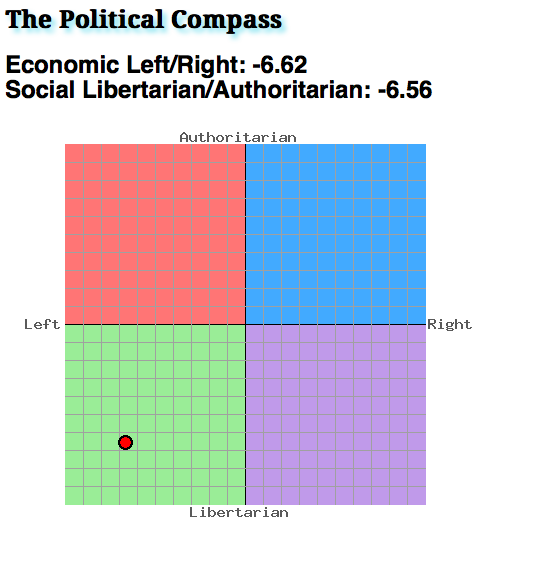
We started on Friday with a comprehension from the 2009 exam paper “Should zoos be closed“. Next I think we’ll all take the test on www.politicalcompass.org to get the brain juices flowing. It asks you a series of questions designed to figure out whether you are left or right wing when it comes to economic decisions and political systems and whether you believe in lots of decision-making from on high (authoritarian) or the individual’s right to make personal, social and ethical decisions for themselves (libertarian).

Once the girls have their personal political identity nailed to a little chart like this one, I’ll present them with a series of debate topics and pair them off with one student proposing, one opposing the motion. Then the hard work begins; the research, the drafting, the rewriting and then presenting their ideas to the class!

Here are the debate topics I’ve come up with, a mixture of topical issues that have featured in the media recently and issues raised by politicalcompass.org

Write a debate speech in which you argue for or against one of the following motions:

Same sex marriage should be legalised across Europe”

In certain situations military intervention is a moral imperative”

Embryonic stem cell research is dangerous and wrong”

Discrimination against Travellers is culturally accepted in Ireland”

Assisted suicide should be available to the terminally ill”

Political correctness has prevented us from really tackling the obesity crisis”

Mental illness remains a taboo subject in Ireland”

Pornography makes sexual attacks on women more acceptable”

Addiction to the internet is a real and present danger in our society”

Unemployment benefit should be reduced the longer a person remains on the live register”

Capitalism serves corporations not people”

Those with private health insurance have the right to higher standards of medical care”

Surveillance of individuals using CCTV footage and long lens cameras has gone too far”.

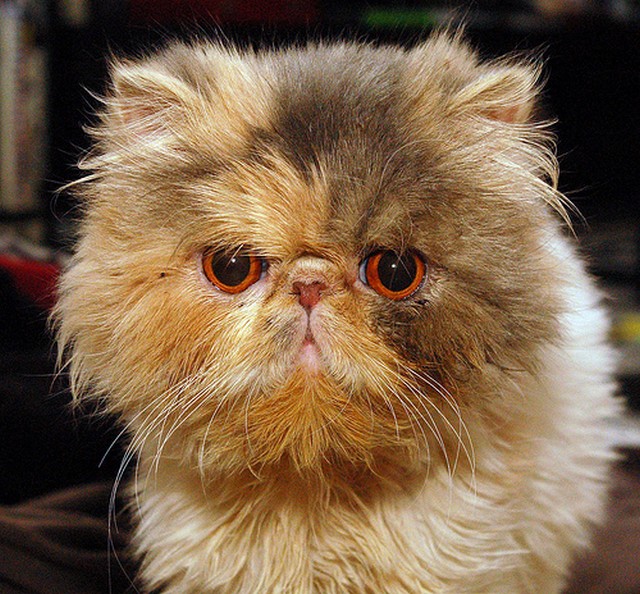
Of course all of this will require lots of brain power and we are talking about first class Monday morning so I’m fully expecting these faces when I break the news that they’ve got another essay to do!!!


Celebrity ‘News’?

The time has come for me to confess.

I normally hide behind my ability to quote random chunks of Shakespeare at will but that doesn’t change the fact that – here it comes – I find it hard to resist celebrity magazines. I stand in the supermarket queue and get sucked in by the gossipy headlines strategically placed to tempt me into wasting my money. I’ll find myself secretly pleased that the person ahead of me is taking forever – you know the type, the woman who waits until every single grocery is packed and stashed before rooting around endlessly in her bottomless handbag groping for her purse.

Why? Because this gives me a chance to flick to the contents page and then quickly scan the article relating to the most scandalous cover story, just to prove to myself what I already know internally – it’ all fluff. Hyped up, OTT, manipulative nonsense that’s not worth my time or energy.

So why do I still get sucked in? And why am I so determined to resist?

I got some clarity on the issue this week as my Leaving Certs and I revisited a comprehension from the 2005 exam paper – it was a mock celebrity interview with Irish Rock Diva Eva Maguire written by a former leaving cert student. One of the comprehension questions asked “Do you find the style of writing in this magazine article appealing?” – and discussed how this question requires a much more subtle answer than your bog standard “Identify and comment on four features of the writer’s style“. And before you freak out, you don’t need to go into anything like this detail in the exam – I’m just the kind of person who doesn’t know when to shut up!

So what is my answer? Well, yes and no.

First off the article is extremely well written but crucially the language nonetheless remains accessible, meaning it will appeal to a large target audience. The writer creates a vivid picture of Eva who “is extraordinarily beautiful and astonishingly tough, steely and ambitious. Her golden hair frames features dominated by huge blue eyes. She wears a diamond and sapphire-studded ring on her left hand…” This article offers us a clear picture of the woman and her lifestyle but it requires little cerebral exertion on our part to gain this insight into her life.And let’s face it this style appeals to most people when they pick up a magazine in a train station or a doctor’s surgery – at that moment they probably don’t want to have to grapple with complex vocabulary they may or may not understand (in fact this can be an issue for more highbrow publications like Time Magazine, The Economist and Vanity Fair who attract a very educated and literate readership but don’t sell in the large numbers that celebirty magazines do).

Secondly, sensationalist show and tell stories appeal to the gossip in all of us – like it or not it’s perfectly natural to feel curious about the lives these people lead and perhaps to even fantasise that one day it could be us flying in a private jet to our holiday home in the Bahamas! So when we read that “she has achieved head- spinning, global success, winning international music awards, packing concert venues and seeing her albums topping charts all over the world” we get a powerful reminder of why it is that so many people show up to X-factor auditions and why they are so devastated when they fail to make it past bootcamp or judges houses.

Thirdly the use of hyperbole, and the overuse of emphatic and superlative words adds to our sense that these people are somehow bigger, better and brighter than ordinary plebians like ourselves. Here “in a rare, exclusive and candid interview, the 24 year -old rock superstar reveals where she sees her destiny and for the first time shares with “Celebrity” readers some of the secrets of her forthcoming wedding plans“. If we can’t see through the manipulation inherent in the language itself we can end up falling for the excitement and drama of the writing. Perhaps this goes some way towards explaining the modern obsession with being famous – not talented or successful or exceptional – but famous for the sake of being famous. Because there is after all only one thing worse than being talked about and that’s NOT being talked about!

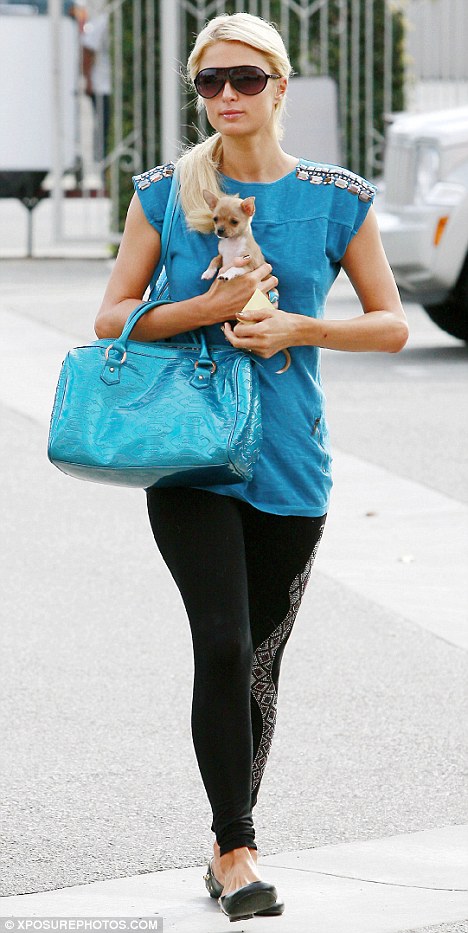
There was one other element of the writing style which appealed to me. Personally, I don’t think this student was paying homage to celebrity magazines by copying their OTT hyped-up style; I think he or she was completely taking the piss, but in a very low key and subtle way. For me this article isn’t a homage it’s a parody! Look at the way it mocks vacuous female celebrities who buy rare breeds of dog (that surely should never have existed) and carry them around in their handbag – in this article the photo shoot “shows her posing with one of her pet miniature greyhounds“. Too ridiculous to be true but we’re almost convinced because this is after all the way many of celebrities carry on! The notion that money doesn’t buy class is again hinted at when we learn more about their wedding plans and are told to “expect six hundred doves to flock the Italian sky at the moment when the wedding vows are made“. I mean ‘puh-lease’! Give me a break!

And that, my friends, is why I haven’t bought a single celebrity magazine in the past four years. Yes, I’ll flick through them at the checkout, but only to remind myself of how empty, vacuous and pathetic they really are. They promise so much yet so rarely deliver. Like this article they promise exclusive access to the inner sanctuary of the celebrity’s home; they hype up the tell-all secrets only they have managed to goad the interviewee into revealing but when all is said and done you learn little you didn’t already know. Maybe that’s why celebrity reality TV shows like the Kardashians are so popular; because they do actually give you no-holds-barred access to the most intimate details of these people’s lives (like one of them seriously gave birth on camera? Just the thought of it makes me feel queasy. That poor baba did not sign up for that!!!).

Finally although it sounds self-righteous and judgemental, there is no denying that this style of journalism promotes superficiality and excessive materialism. It elevates celebrities to a ridiculous status, pretending that their every move qualifies as ‘news’. Spend an evening in our house and you’ll find both my husband and myself regularly shouting at the telly or the radio (or both) saying that’s not news when yet another story about Brad and Angelina’s latest adoption gets higher billing that a mudslide that’s killed hundreds of people. Perhaps this is the greatest crime of all that the oxymoran ‘celebrity news’ commits.  It tells us that we should view the minute details of their daily lives as somehow more significant and important than wars, murders, natural disasters, fraud and world hunger.

Like ‘clean coal’ ‘military intelligence’ and ‘truthful tabloids’ ‘celebrity news’ doesn’t exist! And ultimately, just because it happens to a ‘celebrity’ shouldn’t mean it qualifies as news!

Teacher of the Year Awards

[youtube_sc url=http://www.youtube.com/watch?v=B-gQbttw9Tg&feature=youtu.be]

[youtube_sc url=http://www.youtube.com/watch?v=nCV97Rq_Na8]

Here’s audio from my most recent interview: with Miles Dungan on RTE Radio 1

[soundcloud url=”http://soundcloud.com/leavingcertenglishnet/todaywithpatkenny”]

or click directly on this link: http://soundcloud.com/leavingcertenglishnet/todaywithpatkenny

Here’s the audio from my interview on newstalk

[soundcloud url=”http://soundcloud.com/evelynoconnor/evelyn-on-the-right-hook”]

If that doesn’t load properly just click this link instead: http://soundcloud.com/evelynoconnor/evelyn-on-the-right-hook

The article from thejournal.ie that made my acceptance speech go viral http://www.thejournal.ie/teachers-permanent-non-permanent-evelyn-oconnor-teacher-of-the-yea-502993-Jun2012/

Some further food for thought:

So why are we blindly copying the mistakes that were made in the UK and the US instead of following best international practice to improve our education system and make it once again the envy of the entire world? We were the Island of Saints & Scholars. We have become the island of Rote & Regurgitate. We want to be the Island of Dreaming & Doing.

Let’s debate this properly.