Tag Archives: leaving cert english

How to study English…

I received an email ages ago, an email I’ve been ignoring because I wasn’t sure how to answer it. The essential question I was asked was how to go about studying English and specifically “imagine if a student had an A1 essay on anything that could possibly come up – how could you prepare for the actual exam?

My first thought was ‘are you a good writer?’ In the same way that you might ask someone if they are artistic or musical or good at sport. If that seems an unfair question, I apologize for freaking you out, but I do believe having a ‘way with words’ is a talent like any other.

However, if we leave aside the natural ‘writer’ in you, the problem essentially comes down to this. Don’t study and you’re guaranteed to do badly. Learn off essays (in the worst case scenario, ones you haven’t even written yourself) and you might not do much better! It all depends how flexible you’re willing to be in the exam and on whether or not you wrote these ‘A1 standard essays’ to begin with. If you did, then you have become a good writer through practice and have really engaged with the texts on the course. Well done you, you are on course to do well. If you didn’t, you’ve probably been relying too heavily on other people’s opinions without ever bothering to form your own.

The more you focus on pre-prepared answers, the less likely you are to engage with the question which is asked on the day. If you don’t twist what you know to suit the question that comes up, you will do very badly indeed. One example that springs to mind comes from last year’s leaving cert. We – like most teachers & students – had looked in detail at the theme of revenge in Hamlet. The question that appeared was “Revenge and justice are finely balanced themes in the play Hamlet“. In order to answer this question you could draw on your knowledge of the theme of revenge but you also had to be able to discuss the theme of justice – who has suffered injustice, whose job is it to deliver justice in the kingdom, what might true ‘justice’ (rather than simplistic revenge) look like? How could Hamlet achieve justice? Does he need to punish anyone else? (his mother, Ophelia?). Does he punish anyone else unfairly? (Rosencrantz & Guildenstern???) Also, how are these themes of revenge and justice connected? balanced? is it possible to get revenge and achieve justice at the same time? How does Hamlet convince himself that his revenge is in fact some kind of divine justice and that he himself is God’s appointed avenger?

Now imagine for a second that you had prepared an essay on the theme of revenge – in fact you have an ‘A1 standard essay’ learned off. You may be tempted to just write it, in fact you may lapse into some kind of auto-pilot. But your A1 standard essay won’t get you an A1. It might, in fact, only get you a C3, particularly if you have ignored the word ‘justice‘ and the phrase ‘finely balanced‘ or simply thrown them in in a tokenistic way in your introduction and conclusion. What a question like this aims to assess is the difference between the student who will just regurgitate a pre-learned answer (that they may or may not have written themselves) and the student who can think on their feet, can write well under pressure and can prove that they truly understand the play no matter what question is thrown at them. In this instance, convincing yourself that you have an A1 answer ready for ‘every possible question’ that could come up (and to be honest this is simply impossible – there are too many variations in the way that the question can be worded) may in fact become a kind of false security blanket. Because, let’s face it: if doing well in English was that simple, you’d just need a book of revision notes and the ability to rote learn them all off.

On the other hand, blindly avoiding studying English because you don’t know what will be on the exam paper is almost guaranteed to lead to an essay of complete waffle. Not knowing what you want to say AT ALL can lure you into the awful trap of just telling the story. This style of answer will get you a D3. If it’s really bad, you may even fail.

So what is the solution? Bottom line: you need to know, understand and appreciate the texts you have studied. And you need to be a good writer.

Perhaps to ‘study’ English you need to break down each section into ‘possible’ questions, come up with bullet points (including relevant quotes) and if you have time practice writing your answers under exam conditions. But if you do this, in each case respond to a very specific question – find one from a previous exam paper or google it – here’s what I found when I typed ‘Hamlet Sample Questions’ into my search engine. You can do the same for any of the poets…

In the meantime some advice:

  • Before you start writing, break the question down into key words or phrases.
  • Plan your paragraphs and ensure that you use what you know to respond in every single sentence, and every single paragraph to the question asked.
  • Avoid parroting back the question incessantly. But you must connect what you’ve said directly to the question asked. So use synonyms.
  • Ensure that you only include information which is relevant to the question asked, irrespective of how much you have to leave out to achieve this. There’s no point showing off what you know if it’s not relevant to the question asked.

In terms of studying, spend time actually thinking about the characters, themes, key moments from your single text, comparative and poetry. Know them really well. When I was doing the Leaving Cert. way back in the day I remember dreaming about W.B.Yeats and King Lear and writing things down when I woke up. Yes, I know this makes me a hopeless nerd. But then I always did love English…Meanwhile, I don’t think I ever dreamt about the life cycle of the liver fluke!

Of course being prepared means you are far more likely to do well than someone who is unprepared. But be willing to improvise, to create, to think in the exam so that you pay attention to the most important thing of all. Answering the question asked.

p.s. Studying for paper one is a whole other kettle of fish – for my opinions on what you might do to prepare for QB and the essay see this blog post.

p.p.s. Comprehensions are something you get good at through practice. I intend to write a whole other post on this. Eventually. So watch this space. But not too closely; I can’t handle the pressure…

Proposals

Think about the word for a second. The first thing that sprang into my mind was a marriage proposal. Asking someone to marry you involves proposing that you are the best possible person for them to spend the rest of their life with. No wonder people get nervous! To propose is to put yourself on the line.

The other scenario that came to mind was when you’re at a meeting. Someone will come up with an idea, propose it, need someone else to back them up by ‘seconding’ it and even then there will probably be a vote where people consider the relative merits of your proposal and decide whether or not they want to back it. So in making a proposal you are putting yourself out there, believing – or maybe just hoping – that people will support you on the strength of your idea or your persuasive personality. To propose is to be certain – but it also involves taking a risk.

So while there are no clear guidelines, a proposal falls more or less into the category of the language of information. You should get to the point, avoid any waffle or repetition, pay close attention to structure (make sure it’s well laid out and organized) and use clear, concise language to get your message across.

Remember however, that if this proposal is going to be selected from lots of other proposals it will need to be good. You need to argue your case, persuading your audience that you are the best possible candidate and/or your idea is the best possible idea for whatever it is that you are proposing.

In general follow the same rules you’d use for writing the content of a formal letter, but don’t put in addresses and you may want to use headings (in the same way that you use headings for a report) or you may decide to only have one overall heading which is the title of your proposal. There is no hard and fast rule here so don’t get hung up on it.
 
These are the basic content rules used for formal letter writing:
  • introduce your reason for writing immediately
  • in your middle paragraphs describe in detail why you or your idea should be selected
  • finish by saying what you’d like to happen next and possibly including details of your phone number, availability.
 If you are ‘selling’ yourself think about exploring the following:
  • relevant experience
  • qualifications and/or academic record
  • relevant hobbies or voluntary organizations you’re involved with
  • personality traits
If you are selling an idea, imagine you are on ‘Dragon’s Den’
  • focus on the unique selling points of your idea or product
  • show that you have done your research (handed out a questionnaire, given away free samples, tested the product or idea on a fairly large/diverse group of people)
  • make it clear that you know your target audience – the people who will buy your product or service –  and discuss their specific needs and how you can meet their expectations.
  • have a financial plan (a set of projected costs and profits compiled into accounts)
  • express a belief that this product or service is worth doing, either for financial reward, or for the good of the community or for altruistic reasons (to help others) or if possible all of the above.
Here’s a link to “How to Write a Proposal” – I just googled it. It looks pretty similar to my advice and it includes a few sample proposals which are worth a look.
 
Finally, for those cynics out there who jumped to conclusions when I said a marriage proposal was the first thing that sprang to my mind, it’s not because I’m waiting for one. My handsome husband is another committed blogger – you can find him here.
 
p.s. Here’s the checklist I prepared for my leaving certs when they were writing proposals recently:
 
 Proposals Checklist

 Who will do What? When & Why?

 Step 1: Introduce you idea. You begin with a brief sentence outlining what it is you propose to do / create and mentioning who it is aimed at.

 Step 2: Flesh out the details. The body of the proposal will first offer specific detail on the project, outlining exactly what you propose to do/create, step by step.

 Step 3: Include rationale. (1. selling points, 2. research, 3. expectations 4. expertise). This is where you explain why you believe this approach will be effective (in achieving whatever it is the people paying for this project want to achieve). Focus on the unique selling points of your idea. Have you tested this idea on a sample group? Discuss the specific needs of your target audience and how your project will meet their needs and expectations. You may wish to briefly outline why you are the perfect person to lead this project (relevant experience, qualifications, personality).

 Step 4: Timeframe and financial plan. Specify how long this project will take from start to finish. Include an estimated cost and mention that a detailed set of accounts for projected costs (and potential profits if applicable) is included in the appendix.


Macbeth post-show discussions

Here’s a link to post-show discussions with some of the actors from Second Age’s 2011 production of Macbeth:

http://soundcloud.com/secondage

Here are the post-show discussions from 2012

https://soundcloud.com/secondage-1/manipulation-macbeth-at-the

Topic of the Week: Inspiration!

The exam hall is probably the least condusive environment for inspiration known to humankind. It is a weird pressure cooker of silence and ticking clocks, all tinged with the internal panic of knowing that 37% of your grade in English relies on you finding something to say and saying it well for QB and The Essay. You have no control over the topics that will appear, nor can you predict whether or not you will be paralyzed by indecision or writer’s block. And they say the Leaving Cert is ‘fair’? ‘Brutal’ and ‘cruel’ are the words that spring sooner to my mind! (But then I am prone to hyperbole…)

So what can you do? Well some people ‘prepare’ essays/short stories and hope one of them will sort of, kind of, ‘fit’ on the day. I have seen this work, but only when the student is (a) the writer of these essays/stories – because they have learned how to become a good writer through practice and (b) clever/calm enough to change it significantly to tie in exactly with the essay title that appears on the day.

More often than not I have seen this fail. Spectacularly.

Continue reading

Topic of the Week: Injustice

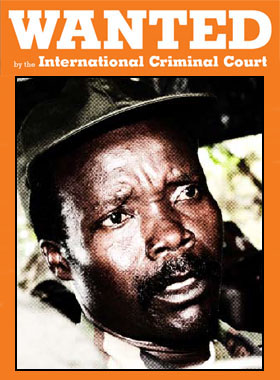
Unless you’ve been living under a rock for the past month you’ll have heard of Kony 2012. Watched by over 77 million people (as of the 14th March), it has sparked an incredibly heated debate worldwide about the nature of social activism. This video certainly demonstrates the power of social media to spread awareness. It is a brilliant – if not always accurate – piece of film-making and offers the simple message that a man capable of such horrific crimes against humanity should -MUST – be arrested and punished. So why all the controversy?

Well first of all, it has raised some incredibly important questions about activism. Will people really need to stick up posters everywhere on 20th of April now that the whole world already knows who Kony is? Is sticking up a poster an effective way of bringing about real change? How many of the 77 million simply watched the video and then did – and will do – nothing? They still got the feel-good factor of being ‘involved’ in a campaign for social justice but all they’ve done is sit on the couch and click ‘play’ on youtube. Not exactly a recipe for changing the world! And if this is the case, do viral videos like this send out a dangerous message, that all you need to do to stop a mass murderer is click the like button on facebook?

Of course I’m guilty of oversimplifiying here. The film-makers want you to spread the video, but THEN take action. Buy the action pack, thus donating to their charity and directly raising funds for the campaign. Here again we run into difficulties because huge questions have been raised about how this charity spends the money it receives. Only 32% of it goes in direct aid to the countries this charity ‘supports’. But that doesn’t mean you should ignore your urge to give money to charity – this would make you no better than the ‘slackers’ who watched the video and then shrugged their shoulders and did nothing. It perhaps just means that Trocaire – a charity which publishes transparent accounts and spends less than 1c of every €1 raised on admin costs  – might be a more appropriate place for your donation. And I’m sure you can cope with not having the Kony 2012 bracelet/poster/action pack. Can’t you?

The most serious criticisms of the video spring from the source we should listen to most carefully however – Ugandans themselves. It seems those who know the real situation see this video as closer to fiction than documentary, using footage a decade old, implying that Kony is still in Uganda (he hasn’t been for years) and suggesting that his army of child soldiers numbers 30,000 (an outdated figure – it’s estimated that he has a few hundred supporters at most – and not necessarily ‘abducted kids’). Most insulting of all is the implication that Americans need to parachute in, Superman style and fix this problem (unilaterally) because the Ugandans are helpless to help themselves. If I were a Ugandan activist I’d find this pretty hard to swallow.

Of course the danger here is that we move from oversimplification to overcomplication – from ‘slacktivism‘ to cynicism. And the end result is sadly all too often the same. We do nothing. How then are the highly educated, cynical elite who debate and complicate a far too simple youtube video on a complex issue ANY BETTER THAN those who take in the message of the video hook, line and sinker? Can’t we somehow find a middle ground between the idealism of the original video – misguided and misrepresentative as it is – and the knowing cynicism of those who know that a youtube video is unlikely to change the world for the better, and may just give Joseph Kony the noteriety he craves, whilst simultaneously undermining Ugandan efforts to win much needed international investment?

Remember when you first watched the video you probably felt the urge to help. Don’t ignore this urge. It is the most noble urge you can have, a testament to our common humanity, a recognition that injustice exists and must be challenged. However, remember that doing something is not necessarily better than doing nothing; doing something is only better if you think carefully about what it is you are doing. Even if your intentions are pure and you simply want to help, acting out of impulse without having all the facts can often be worse (unintentionally) than not acting at all.  The debate over whether foreign aid works is far too complex to get into here but suffice it to say that not all ‘help ‘ is actually helpful. So if you want to DO something, choose carefully. Donate some money to a charity which fully publishes it’s accounts and uses internationally approved development strategies – like Trocaire or Concern. Surely that is the most appropriate, balanced and genuine response to the two extremes represented in this global viral debate.