Tag Archives: english

Originality vs. Cliche

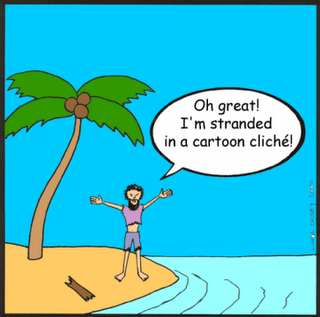
Almost everyone uses cliches at some stage in their writing – ideas that have been overused to the point of being completely boring, obvious and predictable. When you sit down in front of a blank piece of paper the first ideas that pop into your head will more than likely be very similar to the first ideas that pop into the heads of the other 12,000 odd students who choose the same essay topic or question B that you have.

So how do you make your writing stand out? How do you spark some originality in the pressure cooker of the exam hall?

In my opinion half the battle is to move away from a focus on WHAT you’re saying and think more about HOW you’re saying it. Focus on your technique.

Take for example the question we did in class today: you have recently been asked to write a letter to the Department of Education & Science offering your opinion on what makes a good teacher. Certain cliches will pop into your head – classroom control,  hard-working, passionate about their subject, patience, good communication & people skills, innovative approach to learning.

So far all we have is a list. It’s a fairly obvious list and most people would agree with it as a starting off point. But we have not yet said ANYTHING original. Now look at the following examples, one irritatingly informal and full of cliches and generalisations, the other quite witty, entertaining and enjoyable to read.

Example 1 = I am a leaving certificate student and in my opinion if a teacher wants to be good at their job they need to relate to what their students are going through. I mean not all of us have an easy life and sometimes when teachers get on our backs about stupid stuff like homework it just really annoys us. So yeah, I think being able to realise that students have a life outside of school and can’t always put school first is one thing that makes someone a good teacher.

In this example the student TELLS us their opinion and sounds like a bit of a whinger (look at the use of informal phrases such as ‘I mean’ ‘stupid stuff’ ‘so yeah‘)  We probably agree with their ideas but we don’t feel like they’ve told us anything we don’t already know.

Example 2 = Let me illuminate for you the essence of the magic muinteoir. It’s Monday morning. I barely slept last night. My beautiful niece Saoirse (daughter of my brain-dead sister who got knocked up at 16) is teething and let’s just say our house isn’t on Wisteria Lane. Paper thin walls mean I arrive at school with the memory of her wails just fading. Then Alan, my super-gay best-friend decides to stick his leg out and trip me in the corridor (in front of Peter, school ride). How funny. I arrive late to first class. Crap… No hold on, it’s ok. It’s Biology. Mr. Watts senses intuitively that it’s been a bad day, a bad week, hell a bad year. He sidles quietly down to my seat, fills me in on what the rest of the class are quietly doing in pairs, offers to help me catch up and doesn’t blow a gasket that I don’t have my homework done – but does insist that he gets it tomorrow. Here is a safe haven from the madness that is my life & even though I’m tired I want to learn. Is this essence something you can capture? Or sell? Or even fully understand? Maybe all great teachers are just hard-wired this way. Understanding is part of their nature & learning is their bible.      

In this example the writer DRAWS US IN to their experience of good teaching. They set the scene through the senses : sights, sounds, touch (being tripped) and draw us in emotionally by describing their feelings (How funny… Crap…). They give the teacher a believable identity by offering his name & subject, then describe his behaviour in detail. We are sucked into the moment because the writer proves his point using a specific anecdote instead of just making bland factual statements. It ends with 3 rhetorical questions which link back to the question being asked and a dramatic statement which uses hyperbole – hard-wired/nature/bible. The second example also stays focused perfectly on the task at hand – nobody asked you to slag off ‘bad’ teachers, the question asked you to explain/discuss/describe what it is that makes someone a good teacher. So example 1 wanders off point, example 2 sticks with the Q throughout.

By the way, I made up both of these examples so don’t be worrying that I’m going to publish something you’ve written up here. It’s not gonna happen – unless you write something amazing that just HAS to be published and if you do I’ll ask your permission first! Hope this helps rather than just telling you to be more original! Remember these two rules:

  1. SHOW DON’T TELL
  2. USE SPECIFIC EXAMPLES NOT GENERALISATIONS

Studied poetry – questions

When the new course began in 2001, the type of questions that came up were pretty predictable and mostly revolved around giving a personal response to a poet. Since 2007 (and the public debate around grade inflation/rote learning) the questions have become more specific and ask you to discuss particular aspects of a poet’s work. What this means in effect is that you need to know the poet – it’s not enough to just learn off a personal response essay and write it in the exam. You MUST respond to the question asked and use an appropriate style (are you writing a speech? an article? a letter? a critical analysis?) and tone (who are your audience).

Let’s look at the more predictable Q’s (which were entirely absent from the 2010 and 2011 papers)

  1. Personal response = expected to include sentences which use the pronoun ‘I‘. Talk about how the poems made you feel. Identify what they taught you, how they made you look at an issue(s) in a new way. Discuss what you enjoyed in the poet’s style of writing. Explore how these themes are relevant to your life.
  2. Discuss the feelings the poet creates in you. They have on occasions specified certain feelings. For example, unhappiness in Larkin’s poetry, tension in Walcott’s poetry, sadness in Frost’s poetry, Plath as ‘intense & disturbing’. So make sure you know both what feelings the poet expresses in their work and what feelings the poems create in you.
  3. Relevance for the modern reader. This came up in 2002 as a specific question on Bishop.
  4. Appeal of a poet  – what you like and/or dislike about their poetry. Very similar to personal response.
  5. Introduce a poet to new readers giving an overview of their themes & style and explaining why you think they would enjoy reading these poems. This could be in the style of an article or written as a speech/talk for classmates. More informal style.
  6. Write a letter to the poet. You might want to ask them questions, where their inspiration come from etc…
  7. Choose a small selection for inclusion in an anthology & justify your selection. You would choose maybe 3 poems, one to represent each major theme in their ouvre.

Ultimately, however, no matter what the question you are still expected to demonstrate a detailed knowledge of the poet’s themes & style of writing, supporting this with detailed quotations.

There is one more type of question and this is the one which has dominated since 2010:

       8. A specific statement about the poet which you must discuss.

Since 2007, more and more questions have started to appear which demand that you respond to a specific question, discussing to what extent you agree or disagree with it or asking you to prove the truth of the statement (a lot like what you do for the Hamlet question). In 2007 two of the four questions did this (Frost & Plath) while two were personal response. In 2008, two of the four again made a specific statement you had to discuss (Donne & Mahon) while two were more personal response (Larkin & Rich). In 2009 only one was very specific (Walcott) while the other three just specified that you discuss BOTH themes and style in your answer (they talked about a ‘clear’ style for Keats & Montague and a ‘unique’ style for Bishop). As an aside, they keep mentioning the style of writing because a lot of students focus too much on themes (what the poet says) but forget to comment on techniques (how the poet says it) which is vital in any discussion of poetry – including your unseen section.

In 2010 ALL FOUR QUESTIONS mentioned specific aspects of a poet’s work. For Yeats it was real v’s ideal, for Rich it was themes of power and powerlessness, for Kavanagh it was transforming the ordinary into the extraordinary and for Eliot it was troubled characters in a disturbing world. In 2011 ALL FOUR QUESTIONS mentioned specific aspects of a poet’s work. For Yeats it was challenging style and subject matter, for Dickinson it was original startling and thought-provoking poetry, for Boland it was insights and precise language, for Frost it was deceptively simple style with layers of meaning. If you learn off an essay and stick to it rigidly you will not be answering the question (or not be able to answer the question) and the only way you can get a good grade in poetry is to answer the question. In other words, you need to really understand what the poet is about. I hate when students ask me if it’s true that you don’t need to discuss 6 poems in your essay. The simple answer is yes. But if you only know 3 poems by a poet you might not be able to answer the question that comes up. It all depends what appears on the day.

Titles

Sometimes you are asked to comment on the appropriateness of the title of a poem, novel, play etc…

Ask yourself what it is the writer wanted to get across in their title. He/she might want to

  • capture the essence of the storyline
  • make reference to the central theme/themes
  • have some symbolic undertones
  • rouse the reader’s curiosity

This is a careful juggling act however. A few years ago one of my students wrote a brilliant short story but spoiled it by leaving absolutely nothing to the imagination in her choice of title:” The Car Crash

I came across a similar case when I lived in France. A movie called The General’s Daughter was in the cinema. It tells the story of  murder victim Elisabeth and you are completely on her side until you find out some disturbing details about her past.The French title “Le déshonneur d’Elisabeth Campbell” totally spoils the audience’s experience (of being shocked as her secrets are gradually revealed) by giving too much information.

Take a title like “To Kill A Mockingbird”.

The entire plot revolves around the idea of innocent creatures being harmed – Boo Radley, Tom Robinson & his family, even Mayella Ewell so the essence of the plot is captured in the title.

The central themes are discrimination and growing up. Both are referenced in the title. Atticus teaches Scout not to discriminate against or harm any innocent creature and he knows that she has grown into a reponsible young girl when she follows this moral in her own life.

The full symbolic meaning of Atticus’ saying is fully understood by Scout in the final chapter when she decides that turning Boo over to the police and then having him exposed to the scrutiny of the entire community for his heroism would be ‘”sort of like shooting a mockingbird”.

However, on first glance, the title is a mystery and it is only upon reading the novel that it’s full significance is understood. The title is unusual & dramatic because it talks about killing but mentions a songbird. This clash of ideas grabs our attention. Even the grammar of the title is strange – it leaves us hanging because it’s not a complete sentence. Again our curiousity is aroused yet having read the book we feel the title perfectly captures the essence of the novel’s plot, themes & symbolism.


Broadsheets vs. Tabloids

TABLOID HEADLINES are usually:

  • SHORT + SIMPLE eg “COP KILLERS ESCAPE”
  • DRAMATIC + EMOTIVE eg. “JADE HOURS FROM DEATH”
  • BIASED eg. “THUGS TRASH PADDY”S DAY PARADE”
  • Use SLANG eg. “PUNTERS PUNISH HUNTERS”  “BONO NAGS BUSH”
  • Sometimes use ALLITERATION eg. “BECKHAM BIDS BYE-BYE”
  • Sometimes use PUNS eg. “SUPERMARKET SORRY 4 MIS-STEAK”
  • Sometimes use CLICHES eg. “CAN’T BUY ME LOVE”
  • Sometimes use RHYMES eg. “SIMON’S AGE RAGE”

A pun is a play on words eg. “Hole found in nudist camp wall. Police are looking into it.”

A cliché is an over-used/well-known phrase: “Good old days” “Monkey see, monkey do”

BROADSHEET HEADLINES are usually:

  • LONGER eg. “GOVERNMENT URGE MINIMUM ALCOHOL PRICE”
  • FACTUAL eg. “POOR FORECAST THREATENS POTATO CROP”
  • SERIOUS eg. “JADE’S STRUGGLE  FOR LIFE A TALE OF OUR TIMES”
  • TRUTHFUL + UNBIASED eg. “PSNI ATTACKED DURING ARRESTS”


Hamlet – typical questions

It’s difficult to predict what questions will come up for the Shakespearean play. A couple of years ago a lot of multinational companies in Ireland complained that graduates were increasingly finding it difficult to critically analyse data – in other words, to think about large amounts of information and pick out what mattered. Simultaneously, concerns were raised about grade inflation – the number of people achieving high grades in school and college exams kept increasing. The population weren’t getting any cleverer, so the exams must be getting easier.

The examinations commission responded and as a result the more predictable (‘there’s always a character Q’ or ‘personal response’ in poetry) questions are disappearing. There is no need to despair however. You know plenty – you just need a strategy to pick out what matters on the day.

If you figure out how to do this then you’ll also have developed a skill that will last you a lifetime, and one which multinational corporations will be looking for when you graduate college and are looking for a job. So it’s not all a big waste of time even if it feels like that now!

First of all let’s look at the broad categories questions usually fall into.

  1. CHARACTER
  2. THEME
  3. OPEN
  4. STYLE

You must be able to discuss the following when it comes to characters:

HAMLET

  • his state of mind (mostly revealed in soliloquies)
  • his ‘madness’
  • his delay (procrastination)
  • his nobility (is he a good man?) / strengths & weaknesses
  • a tragic hero or an anti-hero?
  • his relationship with Claudius (the struggle between them)
  • his relationship with women (Gertrude & Ophelia) & treatment of them

CLAUDIUS  (a good king? a villain? or an admirable villain?)

GERTRUDE (a good mother despite her flaws? a negative portrayal of women?)

OPHELIA (an innocent victim or a weak and foolish girl? a negative portrayal of women?)

I seriously doubt (please don’t let this come back to haunt me) they’ll ask you to discuss one of the minor characters like Polonius or Horatio, but be able to write one paragraph on each as they would be relevant in discussing good versus evil or loyalty and betrayal. You also need to be able to write one paragraph on Fortinbras and one on Laertes for the theme of revenge.

The major themes in the play are:

  • Revenge (and justice)
  • Good versus Evil
  • Loyalty & Betrayal
  • Appearance versus Reality (Deception)
  • Power & Corruption
  • Death
  • Love

For each theme – no matter what the wording – ask yourself

  1. WHO does this theme apply to?
  2. HOW / WHY does this character have to deal with this issue?
  3. Do they CHANGE over the course of the play?
  4. Are there any SCENES which highlight this theme specifically?
  5. What are our FINAL IMPRESSIONS of this issue?

Asking these questions – and being able to come up with answers yourself – is what critical analysis is all about. Also, anything you take the time to figure out for yourself sticks in your brain. Reading someone else’s ideas just isn’t quite the same!

Open questions ask you to discuss the entire play – not the plot, but your experience of watching/studying the play.

  • Favourite / most dramatic scene.
  • Relevance to a modern audience.
  • Although Hamlet is a tragedy, it is a play with many memorable comic moments – discuss.
  • Hamlet is a dark, depressing and pessimistic play – discuss.

Style questions are quite difficult and pretty rare in the new course (so far) – they ask you to look at how the play is written.

  • Language & imagery.
  • Dramatic function of various characters (how they make the plot more compelling).

No matter how the question is phrased on the day, you must stay calm. Keep using the words from the question and synonyms.

Write down the 5 key Q’s – 1. WHO? 2. HOW/WHY? 3. CHANGE? 4. SCENES? 5. FINAL IMPRESSIONS?

You must quickly plan your 6 paragraphs.

As you are writing, if one paragraph gets too long, turn it into two, no big deal.

Beware of just starting to write and writing until the hour is up (writing whatever comes into your head without doing any planning). This stream of consciousness approach tends to lead to waffle, plot summary and lots of irrelevant information which has nothing to do with the question.

Keep the question in your mind at all times as you write. Remember you must demonstrate that the information you are including is relevant to the question being asked.

If any of the questions above freak you out why not try to figure out what you might discuss now, rather than on the day? You don’t have to write the full essay, you could just plan your 6 paragraphs and think about what quotes you might include.

Good luck!