Monthly Archives: April 2011

Articles

[youtube_sc url=http://www.youtube.com/watch?v=D_5nLxZVoPo]

Newspapers, magazines & websites are filled with articles on every topic imaginable.

If you write an article, you are writing a public discussion of an issue. Even though your response is personal (giving your opinions/describing your experiences) you must also show that you have done your research and know more about this issue than most people!

Techniques =

  • Details – remember the journalists checklist: Who? What? Where? When? How? Why?
  • Quotes – interview experts / eye-witnesses / relatives & friends / local gardai and include quotes (yes, you make them up!) which tell the reader something new about this story.
  • Vivid imagery – describe the event in as much detail as possible (5 senses) so that the reader is drawn into the experience in their imagination (this can be a good way to begin).
  • Background scandal / information – try to include some gossip or little-known facts so that the reader feels you have your finger on the pulse & know more than everyone else.
  • Facts/statistics – link the story to a broader context using statistics. Show how this issue is evident in the rest of society. Is it common or rare? More prevalent nowadays than in the past? More evident in one group in society – male/female/young/old/rich/poor?
  • Personal experience – are you discussing something that you have been through? Then describe your experiences of this topic using anecdotes (remember to use vivid imagery).
  • Humour – discuss the lighter side of the topic. Make the reader laugh (with you or at you).
  • Lists – these are an effective way to sum up the topic and seem knowledgeable.
  • Problem & Solution – don’t simply whine on about the difficulties, try to suggest some constructive and practical ways of tacking this issue, as a society and as individuals.
  • Connecting phrases – these create a flow & help build a series of related ideas for the reader e.g. ‘however’ ‘therefore’ ‘thus’ ‘nonetheless’ ‘of course’ ‘furthermore’ ‘similarly’ ‘indeed’ ‘if’ ‘on the one hand’ ‘on the other hand’ ‘besides’ ‘by contrast’ ‘this reminds me of…’

Broadsheet v’s Tabloid: What’s the difference?

Broadsheets are interested in facts. Language is fairly formal. They present balanced information.

Tabloids are interested in drama. Language is emotive so use plenty of hyperbole & sensationalism. They are usually biased and outraged. Celebrity gossip matters more than war, economics or politics. Tabloids can’t be trusted (never let the truth get in the way of a good story).

Newspaper v’s Magazine: What’s the difference?

Newspapers are aimed at the general public.

Magazines usually have a target market and are aimed at a particular category of people. If writing for a magazine targeting a particular group you may use jargon specific to that hobby or topic.

e.g. golf, fashion, knitting, gardening,scuba diving, adult, kids, t.v., photography, wedding, movies.

Magazines are often more informal than newspapers. Ask yourself who will be reading your magazine, this will help you to decide what tone to adopt.

Website Articles and Blogs?

The internet is now full of articles about every topic imaginable (see www.wikipedia.org). Some are factual, some are opinion pieces, some are personal diaries.

The word ‘blog’ is short for ‘web log’. There are two main types of blog

  1. discusses a particular subject.
  2. a personal online diary.

Blogs are

  • maintained by an individual or a company
  • regularly updated
  • interactive, allowing visitors to leave comments

As of Feb 2011 there were 156 million public blogs in existence.

The language used tends to be fairly informal.

If you are asked to write a blog about a personal event(s) in your life write it in diary style.

If you are asked to write a blog about a particular topic write it in the style of an article.

For satirical news stories, check out www.theonion.com. Hilarious (if you like that sort of thing ;-0)

If you want more help writing your article there are some great resources here http://www.squidoo.com/newspaper-article
Visual texts

Typical questions:

What impact do the visual images make on you?

Which image is most effective in capturing the theme of _________.

Imagine this series of images is to be published in a book of photojournalism.

Which one would you choose for the front cover and why?

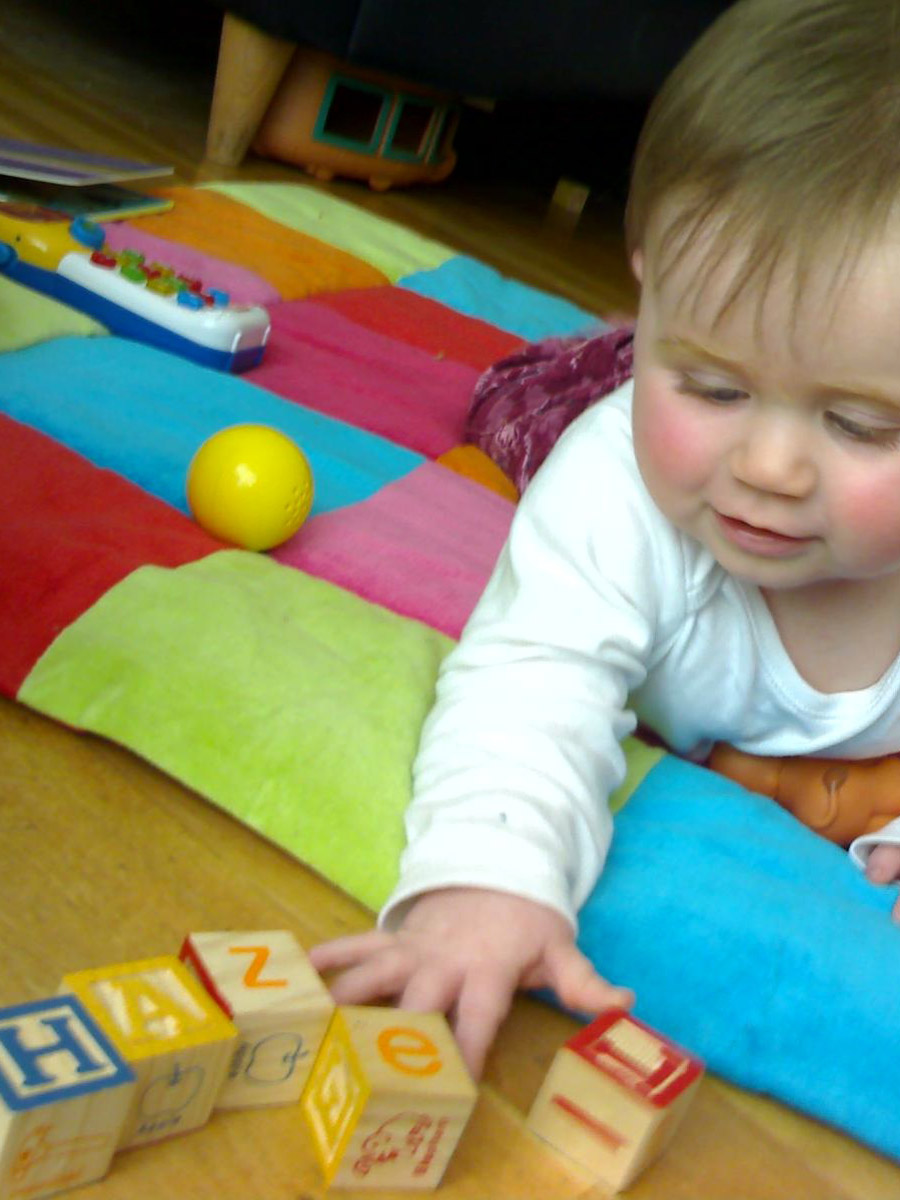
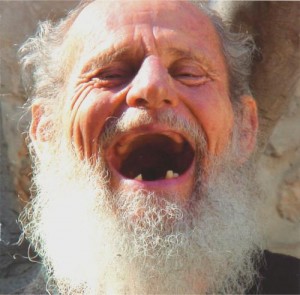
Analysing a photo is a very specific skill. You will be expected to make reference to at least some of the following elements which the photographer may have been aware of when taking the photo. Some photos are set up in a certain way deliberately, others are taken in the moment and only afterwards reveal brilliant composition, lighting etc.

Facial expressions

  • eyes (line of vision)
  • mouth (smile / thin line / open / drooping)
  • tilt of head
  • eyebrows (raised / drawn together )

Body language

  • Arms (folded / down by sides / on hips)
  • Legs (crossed / apart / knees together)
  • Walk (long stride / quick steps / stroll / run)
  • Hands (twisted together / fists clenched / stroking chin / praying)
  • Shoulders (hunched / slouched / thrown back)

Setting – where and when

  • Weather
  • Props / objects / landscape
  • Clothes & hairstyles (these can reveal the era)
  • Accessories (bags / jewelry / phone / keys / book)

Placement

  • What is your eye drawn to immediately? What’s in focus? What’s blurred?
  • Within the frame (what’s in the foreground / background / left & right of centre)
  • In relation to the camera (view from front / side / behind; close or far away?)
  • In relation to the other people/things in the photo (close or distant? Why?)

Mood

  • Colours – primary colours (red/yellow/blue), black & white, sepia
  • Lighting – bright lights for emphasis / use of shadows / photoshop?

Connection to theme / written element

  • What aspects of the theme / subject matter are captured in the image?
  • Is there a caption? What does it reveal / how does it enhance the image?
  • Is the image relevant to the theme? In what ways?
  • In what way does the image reinforce the written message? Or illustrate visually
  • some of the points made in the written section?

When discussing a film (or even just a single scene) you need to consider some of the following:

  • Placement of camera (same as for photos) & framing of shot.
  • POV – from whose point of view is the story being told?
  • Camera movement – does it pan across, tilt up or down, track, zoom?
  • Lighting / mood (same as for photos).
  • Editing / mood – fast (lots of cuts), slow (long shots), smooth (continuity) or jumpy?
  • Sound – music, sound effects, ambient noise, voice over.
  • Acting, costumes, make-up.
  • Locations, props.

Comedy: what makes something funny?


Comedy Genres

Physical Comedy – aka Slapstick

exaggerated violence, clumsiness &/or misfortune, examples include ‘Tom & Jerry‘, ‘Laurel & Hardy‘, ‘The Three Stooges‘, ‘Charlie Chaplin‘

Screwball Comedy

Combination of farcical situations & slapstick with fast-paced witty dialogue and a plot that often involves courtship/marriage/remarriage, examples include ‘American Pie‘, ‘There’s Something About Mary‘, ‘Kingpin’

Comedy of Manners

Ridicules the behaviour & mannerisms of a particular part of society, often the upper class, examples include ‘Keeping Up Appearances‘, ‘Faulty Towers‘, ‘Little Britain‘.

Romantic Comedy

Focuses on the foibles & adventures of those falling in love. The term ’romcom’ is used too often nowadays – lots of romantic movies are called romcoms but aren’t very funny at all! Examples of funny romcoms include ‘How To Lose a Guy in 10 Days‘, ‘Four Weddings and a Funeral‘, ‘10 Things I Hate About You‘.

Black Comedy

Discussing topics & events that are usually regarded as taboo in a comic way. Intention is often to provoke discomfort & serious thought as well as amusement. Taboo themes include murder, suicide, cannibalism, war, drug abuse, domestic violence, insanity, terminal illness, racism, disability, chauvinism, corruption, crime. Examples Include ‘Blackadder’ & comedians such as Jimmy Carr & Tommy Tiernan.

Sub-genres: blue comedy (jokes about sex) & toilet humour (jokes about pee & poo).

Satire

Uses irony to portray persons or social institutions as ridiculous or corrupt. Often focuses on politics/ politicians /government ineptitude. Examples include political cartoons in newspapers, Tina Fey’s impressions of Sarah Palin, ‘Gift Grub‘, ‘Yes Minister‘, ‘Yes Prime Minister‘.

Parody

mimics a well known genre, person or artwork in order to make fun of it, but often in a complimentary way (unlike satire). Examples include ‘Scrubs’ (parody of hospital drama), ‘Scary Movie‘ (parody of horror movie clichés).

Word Play/ Pun / Double Entendre

makes use of the fact that words can have more than one meaning & spelling. Examples are found daily in tabloid headlines, but are also frequently used by the writers of comic songs eg ‘Breakfast Roll Song‘.

Observational comedy

Draws attention to the way we live our lives by making familiar situations appear cringe worthy & human beings seem ridiculous. Most famous example is The Office.

WHY DO WE LAUGH?

Most comedy contains some of the following elements:

  • Surprise
  • Conflict
  • Repetitiveness
  • Incongruity / ridiculousness
  • Plant and pay off

Perhaps we laugh because the comedy made us feel foolish by giving us the opposite of what we expected.

Perhaps we laugh at others because it makes us feel good about ourselves and glad we’re not in their situation. (Schadenfreude = happiness at the misfortune of others. It’s a German word, we don’t have an equivalent in English)

Perhaps we laugh because the comedy has made us more aware of our own stupidity.

Perhaps comedy allows us to laugh at things we’re expected to take seriously in everyday life.

Perhaps comedians say things we all think but never say & their honesty makes us laugh.

Perhaps comedians give us a new way of looking at the world.

For a more detailed discussion of why we find things funny, see Jimmy Carr’s book “The Naked Jape”.

Answering style Q’s

Questions on the writer’s style have become more complex in recent years. However, at least they don’t leave you in a vacuum! Instead you are given some features and then asked to demonstrate that you can locate these elements and  discuss them, displaying a clear understanding of what they are, where they are in the text and how they work.

eg. 2014 Text 1

Ford’s writing is characterised by its engaging narrative, lyrical beauty and concrete realism. Based on your reading from paragraph three onwards of the above extract, to what extent do you think this statement is accurate? Refer to features of Ford’s writing style evident in the extract in support of your viewpoint.

You can also be asked to take a comparative approach where you examine two different styles of writing, decide which one you prefer and then defend your preference! So “In my opinion, this writer is better than this writer at making his point because….”

e.g. 2014 Text 2

In your opinion, which of the above novelists, Alan Warner or John Lanchester, more effectively conveys his point of view? Explain your answer with reference to features of style evident in both of their contributions.


Other sample questions on the writers style include:

1. Select three features of the writer’s style and comment on their effectiveness.

2. Do you find the style of writing in this article appealing?

3. What features make this an interesting piece of informative writing?

4. Identify 4 features of argumentative &/or persuasive writing & comment on their effectiveness.

5. Identify 4 elements of effective speech-writing & comment on their effectiveness.

6. Select the quotation used in the passage which the greatest impact on you and give reasons for your choice.


You must be able to distinguish between informative, persuasive and argumentative writing.

See the following article: Summary of Language Genres

Next you must be able to explain what makes each technique effective – this refers to both the effect the technique has on the reader and the impression of the writer this technique creates.

To see a list of techniques and a description of what makes each one effective you’ll need to download this file (Techniques.doc) – it’s too wide to put up as an article.

You might also want to look at this wikipedia article but a lot of the terms are overly complex and you don’t need to know most of them http://en.wikipedia.org/wiki/Literary_devices

For a discussion of some of the errors students make when answering style questions, see this article on Vivid Feckin’ Imagery

Describe a personality / lifestyle

PERSONALITY TRAITS

ANSWERING COMPREHENSIONS

What kind of person is the writer/narrator/character? What impression do you form of…

Describe the character of……. What do we learn about the personality of……..

The list of words below are intended as a way to prompt ideas. However, you must remember that simply figuring out the ‘right’ answer (if there even is such a thing in English!) isn’t enough – it’s not just what you say, but also how you say it that matters. Your answer needs to flow from one idea to the next and to show depth and insight.

Compare these two snippets:

Kate seems like a kind person. We see this when she puts her arm around Aisling’s shoulders and says “hush now, don’t cry, we’ll figure something out“.

OR

Kate is the kind of person who helps old ladies across the road and rescues kittens from trees. Kate has never met Aisling before and yet she interrupts a very busy schedule to calm and comfort her. Kate’s determination to find a solution “we’ll figure something out” reveals a ‘never say die’ attitude that I really admire“.

Both of these answers identify kindness as one of Kate’s personality traits (for the record these are only partial answers – you’d need to identity four or five aspects of her personality when writing a full answer) but the first one might scrape you a D in an honours English paper while the second would get you an A. So remember – it’s not just WHAT you say that counts – HOW you say it is supremely important if you want to get a good grade.

One thing you need to consider is whether or not your response has sufficient depth. It’s never enough to simply (1) find and regurgitate the information that’s in the passage. You must (2) interpret the text. Ask yourself what is being implied and suggested even if it’s not explicitly stated. Finally you need to reflect on how this links to your prior knowledge and (3) evaluate what is being said. I have interpreted the text when I comment on Kate’s busy schedule and praise her willingness to help a stranger. I have also linked to my own knowledge and experience of human nature when I mention a ‘never say die attitude’. Finally I evaluate her personality by saying that I admire her.

A

Affectionate, caring, considerate, kind, thoughtful, generous, selfless,unselfish

Ambitious, driven, determined, focused, hard-working, interested, motivated, assertive, pro-active

Analytical

Anxious, uptight

Arrogant, conceited, vain, condescending, obnoxious

C

Cautious

Cheerful, optimistic, positive, happy-go-lucky

Childish, immature

Complex

Confident, self-confident

Co-operative, helpful, good-natured

Courageous, brave, decisive

Cowardly

Curious, inquisitive

Cynical

D

Dishonest

Devoted, loyal, friendly

Distant, aloof, secretive, cold, callous, cruel, uncaring

E

Eager, enthusiastic

F

Facetious

Forgiving

G

Genuine, sincere, serious

Grumpy, pessimist(ic), gloomy, sour

H

Honest

Humble, modest

Hostile

I

Inconsiderate, inflexible, thoughtless, uncooperative, impolite, irresponsible

Impatient

Indecisive

Intelligent, clever, knowledgeable

Interfering, meddlesome

J

Judgemental, condescending, critical, intolerant, prejudiced

Jealous, envious

L

Lazy, scattered, unfocused, apathetic, unmotivated, indifferent

M

Miserly, stingy, frugal, thrifty

Malicious, evil

Mature

Melodramatic, moody, temperamental

N

Naive, innocent

O

Observant

Open-minded, tolerant

Opinionated

P

Pedantic

Perfectionist

Polite, mannerly, refined

Practical, punctual

Pretentious, fake

R

Realist, realistic

Rude

Rebellious

Reliable, responsible

S

Sarcastic, witty

Self-centered, selfish, self-involved

Self-conscious, insecure, paranoid, neurotic,

Sensitive, shy, reserved

Stubborn, persistent

T

Tactful

Trusting

Thoughtful, pensive, philosophical

U

Unusual

Uneducated, ignorant

W

Wealthy


If asked to describe someone’s lifestyle, obviously full sentences will reveal more than individual words but here are some suggestions:

He / she lives a very __________ lifestyle.

  • frugal
  • opulent
  • decadent
  • carefree / relaxed
  • eccentric
  • rewarding
  • demanding
  • pressurised